Conditions we treat
ADVANTAGE THERAPY

Lower Back Pain
Low back pain is one of the most common musculoskeletal conditions and can become especially frustrating when it persists for months or years despite repeated treatment. While pain may be felt in the same general area, the underlying cause can vary significantly from person to person. Common contributors include disc irritation or degeneration, facet joint dysfunction, muscle weakness or imbalance, poor spinal or pelvic control, chronic muscle guarding, limited hip mobility, sacroiliac dysfunction, irritated nerves, ligament or tendon-related pain, previous injuries, and repetitive stresses from work, exercise, or prolonged sitting. In many chronic cases, more than one structure or movement problem contributes to the pain, which is why simply treating the painful area may provide only temporary relief.
At Advantage Therapy, we take a more individualized approach to chronic low back pain. Rather than beginning with a predetermined treatment or generic exercise program, we perform a detailed assessment to determine the movements, tissues, strength deficits, mobility restrictions, and neuromuscular patterns that may be contributing to your symptoms. Treatment is then tailored to those findings and may incorporate hands-on manual therapy, dry needling, joint mobilization or manipulation, neuro/myofascial release, radial or focused shockwave therapy, lumbar traction, soft-tissue mobilization, muscle activation, and neuromuscular re-education when appropriate. Just as importantly, we prescribe a targeted home rehabilitation program designed around what we find during your evaluation. The goal isn’t simply to make your back feel better for a day or two—it is to identify and address the factors driving the recurring problem, progressively restore normal function, and build the strength and control needed for longer-lasting results.

Sciatica
Sciatica describes pain, burning, tingling, numbness, or other nerve-related symptoms that travel from the low back or buttock into the leg along the pathway of the sciatic nerve. Symptoms can extend into the thigh, calf, or foot and may occur with or without significant low back pain. Although sciatica is often blamed on a “pinched nerve” or herniated disc, there are multiple potential causes. These include disc bulges or herniations, irritation or compression of a lumbar nerve root, spinal stenosis, degenerative changes, muscular or fascial restrictions, reduced nerve mobility, deep gluteal or piriformis-related compression, previous injuries, and movement or strength deficits that repeatedly place stress on sensitive tissues. Because several different problems can produce similar symptoms, determining where the nerve is actually being irritated and why is an important part of treatment.
At Advantage Therapy, we don’t treat every case of sciatica as if it comes from the same place. Your evaluation is designed to determine whether symptoms are primarily coming from the lumbar spine, nerve root, hip or gluteal region, peripheral nerve entrapment, or a combination of factors. Treatment is then individualized and may include neuro/myofascial release, nerve mobilization, dry needling, spinal or pelvic mobilization/manipulation, lumbar traction, radial or focused shockwave therapy, soft-tissue treatment, muscle activation, and neuromuscular re-education when appropriate. We combine this hands-on treatment with a customized home rehabilitation program to address the strength, mobility, and movement deficits contributing to the problem. Rather than only trying to temporarily decrease leg pain, our goal is to identify the source of the nerve irritation, reduce the mechanical stress affecting it, restore normal nerve and movement function, and address the underlying factors that may be causing symptoms to continually return.

Neck Pain
Neck pain can range from a persistent ache and stiffness to sharp pain that significantly limits turning, looking up or down, sleeping, working, or exercising. Chronic neck pain is rarely as simple as having “tight muscles.” Potential contributors include cervical joint or facet dysfunction, disc irritation or degeneration, poor mobility, muscle weakness or imbalance, chronic muscle guarding, postural and repetitive stress, previous injuries, nerve irritation or entrapment, and restrictions involving the surrounding muscles and fascia. The shoulders, upper back, and shoulder blades can also influence how much stress is placed on the cervical spine. In many long-standing cases, several of these factors occur together, which can explain why massage, adjustments, stretching, or exercises alone may provide relief without completely resolving the problem.
At Advantage Therapy, we focus on determining why your neck continues to hurt rather than simply treating where it hurts. Your evaluation examines cervical and upper-thoracic mobility, joint mechanics, muscle strength and activation, nerve involvement, movement patterns, and surrounding soft tissues to identify the factors most likely contributing to your symptoms. Treatment is then customized and may include dry needling, neuro/myofascial release, cervical and thoracic joint mobilization or manipulation, cervical traction, soft-tissue mobilization, muscle activation techniques, and neuromuscular re-education when appropriate. These hands-on treatments are combined with a targeted home rehabilitation program designed specifically around your findings. Our goal is not just temporary improvement in tightness or stiffness—it is to restore mobility, improve muscular support and control, reduce irritation of sensitive structures, and address the underlying factors allowing the neck pain to repeatedly return.
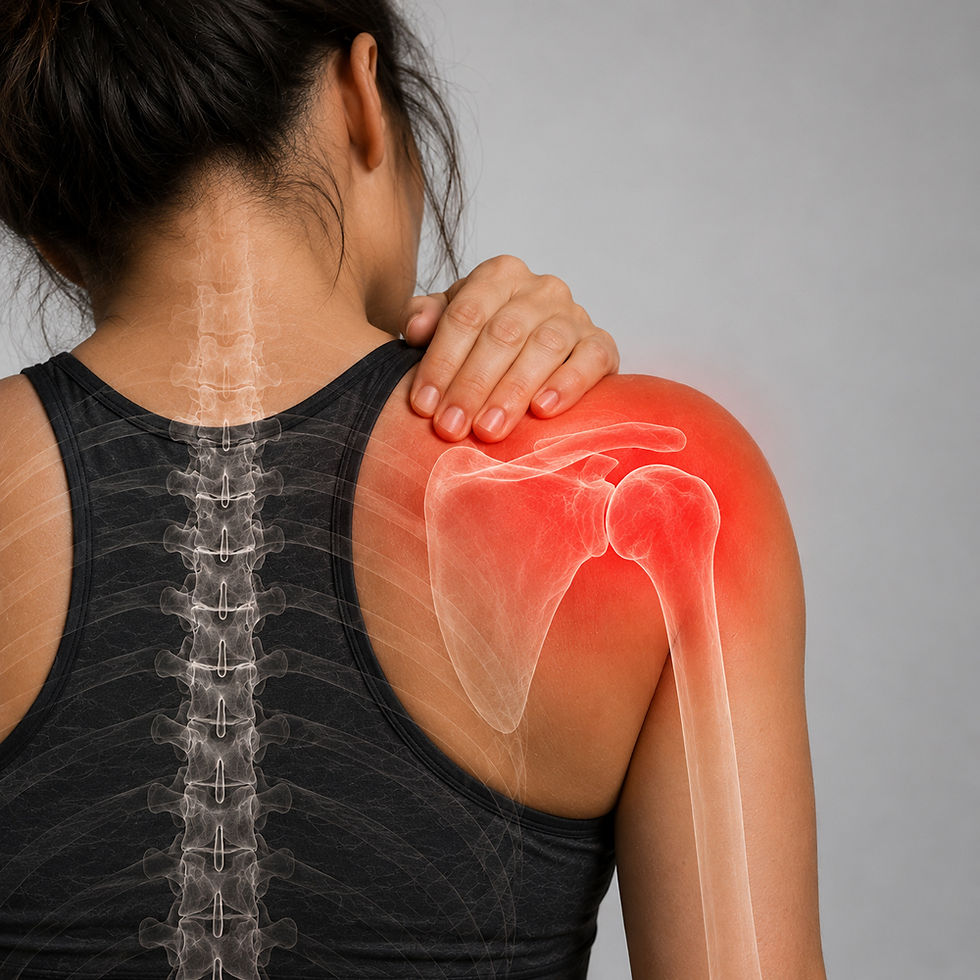
Shoulder Pain
Shoulder pain can make everyday activities such as reaching overhead, sleeping on your side, lifting, exercising, or even getting dressed uncomfortable. Because the shoulder relies on coordinated movement between the shoulder joint, rotator cuff, shoulder blade, upper back, and surrounding muscles, chronic pain can develop for many different reasons. Common causes include rotator cuff tendinopathy, bursitis, impingement-related pain, labral irritation, arthritis, joint or capsule stiffness, previous injuries, muscle weakness or imbalance, poor scapular control, and restrictions in the neck or upper back. Nerve irritation can also produce pain that feels like a shoulder problem even when the shoulder itself is not the primary source. Identifying which structures and movement patterns are actually contributing to the pain is essential for choosing the right treatment.
At Advantage Therapy, we don’t automatically treat every painful shoulder with the same exercises or simply work on the area that hurts. We assess shoulder mobility, rotator cuff strength, scapular mechanics, joint mobility, muscle activation, cervical involvement, nerve tension, and the specific movements that reproduce your symptoms to determine what is driving the problem. Treatment is then individualized and may include dry needling, neuro/myofascial release, joint mobilization or manipulation, radial or focused shockwave therapy, assisted soft-tissue mobilization, muscle activation techniques, and neuromuscular re-education when appropriate. These treatments are combined with a customized home rehabilitation program designed to progressively strengthen the rotator cuff and surrounding musculature while improving shoulder mechanics. Our goal is to reduce irritated tissue, restore comfortable movement, rebuild strength and control, and address the underlying reason the shoulder continues to hurt rather than only temporarily reducing symptoms.

Hip Pain
Hip pain can develop gradually or after an injury and may be felt in the front of the hip or groin, outside of the hip, buttock, or surrounding pelvic region. Because several joints, muscles, tendons, nerves, and surrounding structures can produce similar symptoms, identifying the actual source of chronic hip pain is important. Potential causes include gluteal tendinopathy, hip osteoarthritis, labral irritation, joint or capsule stiffness, hip impingement, bursitis, muscle weakness or imbalance, limited hip mobility, previous injuries, and repetitive stress from walking, running, exercise, or prolonged sitting. Pain around the hip can also originate from the lumbar spine, sacroiliac joint, or irritated peripheral nerves. In chronic cases, the painful structure may only be part of the problem—weakness and altered movement mechanics can continue placing excessive stress on the area even after the initial injury has healed.
At Advantage Therapy, we don’t simply treat the painful spot or prescribe the same generic hip-strengthening exercises to everyone. We evaluate hip mobility, joint mechanics, muscle strength and activation, pelvic control, walking and functional movement patterns, lumbar and SI joint involvement, tendon loading, and potential nerve involvement to determine what is contributing to your symptoms. Treatment is individualized and may include joint mobilization or manipulation, dry needling, neuro/myofascial release, radial or focused shockwave therapy, assisted soft-tissue mobilization, muscle activation, and neuromuscular re-education when appropriate. These hands-on treatments are combined with a customized rehabilitation program designed to progressively strengthen and load the tissues that need it. Our goal is to reduce pain and irritation while correcting the mobility, strength, and movement deficits that may be continually overloading the hip—helping you return to walking, exercising, sleeping, and everyday activities with greater confidence and less pain.

Knee Pain
Knee pain can affect walking, stairs, squatting, running, exercising, and even sitting for extended periods. Because the knee depends on coordinated movement between the hip, knee, ankle, muscles, tendons, ligaments, and kneecap, the location of the pain does not always reveal the underlying problem. Common causes include patellar or quadriceps tendinopathy, patellofemoral pain, meniscus irritation or injury, osteoarthritis, ligament sprains, bursitis, joint stiffness, previous injuries, muscle weakness, and poor control of the hip or knee during movement. Limited ankle or hip mobility can also change the forces placed through the knee. In chronic cases, irritated tissue may continue to be overloaded because the strength or movement problem that originally contributed to the pain was never fully addressed.
At Advantage Therapy, we look beyond the painful knee to determine why that tissue is being repeatedly irritated. Your evaluation may assess knee and patellar mobility, ligament and meniscus involvement, tendon sensitivity, hip and quadriceps strength, muscle activation, ankle and hip mobility, balance, and movement mechanics during activities such as squatting, stepping, walking, or running. Treatment is then individualized and may include joint mobilization, dry needling, neuro/myofascial release, radial or focused shockwave therapy, assisted soft-tissue mobilization, muscle activation, and neuromuscular re-education when appropriate. We combine hands-on treatment with a progressive home rehabilitation program designed to strengthen and appropriately load the knee and surrounding tissues. Our goal is to calm irritated structures while correcting the strength, mobility, and movement deficits contributing to the problem—helping you return to everyday activities and exercise with less pain and greater confidence.

Sacroiliac (SI) Joint Pain
Sacroiliac (SI) joint pain is typically felt near the PSIS or “dimple” area of the low back and upper buttock and may be present on one or both sides. Pain can occur with walking, standing, sitting, bending, rolling in bed, stairs, or transitioning from sitting to standing. Although the SI joint itself can become irritated, pain in this region can also come from the posterior SI ligaments, surrounding muscles and tendons, lumbar spine, sacral structures, or irritated cluneal nerves. Previous injuries, repetitive loading, pregnancy, differences in hip mobility, muscle weakness, poor pelvic control, and altered movement mechanics can all contribute. Because several structures are located within a relatively small area, simply labeling every case as “SI dysfunction” can overlook the actual tissue responsible for persistent pain.
At Advantage Therapy, we take a more detailed approach to chronic SI-region pain. We evaluate the SI joint, lumbar spine, hips, pelvic mechanics, muscle strength and activation, surrounding ligaments and tendons, functional movement, and potential nerve involvement to determine which structures are most likely generating or perpetuating your symptoms. Treatment is then individualized and may include SI or lumbar joint mobilization/manipulation, dry needling, neuro/myofascial release, radial or focused shockwave therapy, assisted soft-tissue mobilization, muscle activation, and neuromuscular re-education when appropriate. We combine hands-on treatment with a customized rehabilitation program designed to improve pelvic stability, strength, and load tolerance. Rather than repeatedly treating the painful spot, our goal is to identify the specific structures involved, reduce irritation, improve how the pelvis and surrounding muscles manage load, and address the underlying factors allowing SI-region pain to continually return.

Nerve Entrapments
( Pinched Nerves)
Nerve entrapment occurs when a peripheral nerve becomes compressed, irritated, or restricted somewhere along its pathway, potentially causing burning, tingling, numbness, aching, hypersensitivity, or weakness. Symptoms can sometimes resemble a problem originating from the spine, making it important to determine where the nerve is actually being affected. Common examples include ulnar nerve entrapment at the elbow, carpal tunnel syndrome, radial nerve entrapment, peroneal nerve entrapment, sciatic or deep gluteal nerve irritation, and cluneal nerve entrapment around the low back and pelvis. Contributing factors may include repetitive movements, previous injuries, prolonged compression, muscle or fascial restrictions, scar tissue, inflammation, reduced nerve mobility, or mechanical stress from surrounding joints and tissues. In some cases, irritation may occur at more than one location along the same nerve pathway, which can make chronic symptoms particularly difficult to resolve.
At Advantage Therapy, we don’t automatically assume numbness, tingling, or radiating pain is coming from the neck or low back. We assess the entire nerve pathway, using movement testing, nerve tension and mobility testing, strength and sensation findings, and targeted examination of common entrapment sites to help identify where symptoms are being reproduced. Treatment is then directed toward the suspected source and may include neuro/myofascial release, nerve mobilization, dry needling, joint mobilization or manipulation, radial or focused shockwave therapy, assisted soft-tissue mobilization, muscle activation, and neuromuscular re-education when appropriate. We also provide an individualized home program designed to improve nerve mobility and address the strength or movement factors contributing to repeated irritation. Our goal is to identify where the nerve is being affected, reduce mechanical irritation around it, restore normal nerve movement and function, and address the factors that may be causing the entrapment to repeatedly return.

Ankle/Foot/Plantar Fasciitis
Plantar fasciitis is a common cause of heel and arch pain involving irritation and degeneration of the plantar fascia, the thick band of connective tissue that supports the bottom of the foot. Symptoms are often most noticeable with the first few steps in the morning, after prolonged sitting, or during extended periods of standing, walking, or running. Although pain is typically concentrated near the inside of the heel, the underlying problem is not always isolated to the plantar fascia itself. Contributing factors can include calf tightness, limited ankle mobility, weakness of the intrinsic foot muscles, poor foot and ankle mechanics, sudden increases in activity, repetitive loading, changes in footwear, prolonged standing, and reduced strength or control farther up the leg. Chronic cases may involve more degenerative changes within the fascia rather than simple inflammation, which can help explain why rest, stretching, or temporary symptom relief alone may not completely resolve the problem.
At Advantage Therapy, we look beyond simply stretching the plantar fascia or rolling the foot on a ball. We evaluate ankle mobility, calf flexibility and strength, foot mechanics, intrinsic foot muscle function, walking or running mechanics, tendon involvement, and the specific activities that repeatedly load the painful tissue. Treatment is individualized and may include radial or focused shockwave therapy, dry needling, assisted soft-tissue mobilization, neuro/myofascial release, foot and ankle joint mobilization, muscle activation, and neuromuscular re-education when appropriate. We combine these treatments with a progressive home rehabilitation program designed to strengthen the foot and lower leg and gradually improve the plantar fascia’s ability to tolerate load. Our goal is to reduce pain while improving the mobility, strength, and load tolerance needed to address why the plantar fascia became irritated in the first place—rather than only providing temporary heel-pain relief.

Tendinopathy
Tendinopathy is a chronic condition involving pain, reduced function, and changes within a tendon, often developing when the tendon is repeatedly exposed to more stress than it can adequately recover from. It can occur throughout the body, with common examples including rotator cuff tendinopathy, tennis or golfer’s elbow, gluteal tendinopathy, patellar tendinopathy, Achilles tendinopathy, and hamstring tendinopathy. Unlike a simple acute inflammatory injury, chronic tendinopathy often involves changes in tendon structure and decreased tolerance to load. Contributing factors can include repetitive activity, sudden increases in exercise or workload, muscle weakness, poor movement mechanics, reduced joint mobility, previous injuries, inadequate recovery, and repeatedly overloading the tendon. This is why simply resting the area or temporarily reducing inflammation may decrease symptoms without restoring the tendon’s ability to tolerate normal activity.
At Advantage Therapy, we focus on both the painful tendon and the underlying reason it continues to be overloaded. We evaluate tendon sensitivity and loading tolerance along with surrounding muscle strength, joint mobility, movement mechanics, and the activities that reproduce your symptoms. Treatment may include radial or focused shockwave therapy, dry needling, neuro/myofascial release, assisted soft-tissue mobilization, joint mobilization, muscle activation, and neuromuscular re-education when appropriate. Most importantly, treatment is combined with a progressive tendon-loading and strengthening program specifically designed for the involved tendon and your current level of tolerance. Our goal is not simply to make the tendon temporarily feel better—it is to reduce pain, progressively rebuild tendon capacity, correct contributing strength and movement deficits, and help the tendon tolerate the demands of work, exercise, and everyday life again.

Headaches
Headaches can have many different causes, but when they repeatedly occur alongside neck pain, stiffness, or muscle tension, the cervical spine and surrounding tissues may be contributing to the symptoms. Cervicogenic and musculoskeletal-related headaches can originate from irritated upper cervical joints, restricted neck mobility, muscle tension or trigger points, previous neck injuries, postural stress, weakness or poor muscular control, and irritation of structures around the base of the skull. Tight or overactive suboccipital muscles, upper trapezius, levator scapulae, and cervical muscles may also contribute. Because headaches can have causes unrelated to the musculoskeletal system, our evaluation also helps determine whether physical therapy is appropriate or whether further medical evaluation is warranted.
At Advantage Therapy, we don’t simply massage the neck and temporarily reduce tension. We evaluate the upper cervical spine, neck and thoracic mobility, muscular function, posture and movement patterns, and potential nerve or soft-tissue involvement to determine whether a mechanical problem may be contributing to recurring headaches. When appropriate, treatment may include dry needling, neuro/myofascial release, cervical and thoracic joint mobilization or manipulation, soft-tissue mobilization, cervical traction, muscle activation, and neuromuscular re-education. This is combined with an individualized home program to improve mobility, strength, and control between visits. Our goal is to address the underlying musculoskeletal contributors to recurring headaches—not simply provide short-term relief each time the headache returns.

Elbow Pain
Elbow pain can make gripping, lifting, carrying, typing, exercising, or repetitive arm movements uncomfortable and is often related to overload of the muscles and tendons that attach around the elbow. Common causes include tennis elbow (lateral epicondylalgia), golfer’s elbow (medial epicondylalgia), biceps or triceps tendinopathy, joint irritation or stiffness, repetitive strain, previous injuries, muscle weakness, and excessive gripping or lifting demands. Nerves passing through the elbow—particularly the ulnar, radial, and median nerves—can also become irritated or entrapped and produce pain, burning, tingling, numbness, or weakness into the forearm and hand. In chronic tendon conditions, the problem may involve degenerative changes and reduced load tolerance rather than ongoing inflammation alone, which is one reason rest, braces, injections, or repeatedly treating the painful spot may provide only temporary improvement.
At Advantage Therapy, we determine whether your elbow pain is primarily coming from a tendon, joint, muscle, nerve, or a combination of structures rather than treating every case as tennis elbow. We assess tendon loading, grip strength, elbow and wrist mobility, muscle function, nerve mobility, potential entrapment sites, and how the shoulder and upper extremity are contributing to the stresses placed on the elbow. Treatment is then individualized and may include radial or focused shockwave therapy, dry needling, neuro/myofascial release, assisted soft-tissue mobilization, joint mobilization, nerve mobilization, muscle activation, and neuromuscular re-education when appropriate. These treatments are combined with a progressive rehabilitation program designed to rebuild tendon and muscle capacity. Our goal is to reduce pain while restoring the strength and load tolerance necessary for lasting improvement—not simply calm the elbow down until the same activities cause it to hurt again.